Melbourne homes, heritage and the rental rules
Deadlocks in a Heritage Terrace: What You Can and Can't Change
· Easy Pick Locksmiths
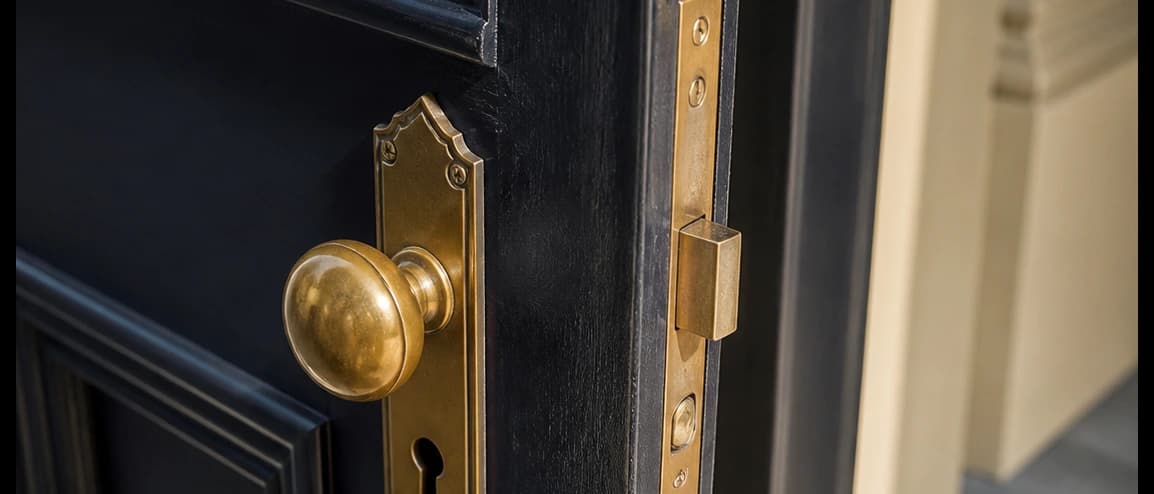
Inner Melbourne runs on Victorian and Edwardian terraces, and their front doors were built before the hardware everyone now assumes is standard. The collision is specific: a door with a narrow stile, often under a heritage overlay, and a modern expectation — sometimes a legal requirement — of a functioning deadlock.
Why a modern deadbolt often will not fit
The stile is the vertical timber at the edge of the door. A standard tubular deadbolt needs a large round hole bored through the face of it plus a cross-bore for the bolt, and on a period door the stile is frequently too narrow to take that without weakening the door badly or breaking through into the panel moulding.
This is why people are told a heritage door 'cannot have a deadlock'. What is usually true is that it cannot have that deadlock.
What does fit
- A mortice lock sized for the stile — the bolt lives inside a pocket cut into the edge of the door rather than through its face. This is the original technology for these doors and it is still made.
- A rim lock or rim deadlock, mounted on the inner face of the door, which touches the outer face only where the cylinder passes through.
- A narrow-stile deadlock designed for exactly this problem.
- Retaining the original escutcheon and knob over new internals, so the street-facing appearance does not change.
Heritage overlay versus heritage listing
These are not the same thing and the difference decides how much of a conversation you are having. A heritage overlay is a planning control applied by the council over an area or a property, and what it restricts is usually external appearance and demolition.
In most cases, hardware on a front door that keeps the door's appearance intact is not the thing an overlay is aimed at. Where a property is individually listed, or where the change would be visible and material, a permit conversation is real — and that is exactly the case the rental minimum standards recognise as an exemption, where permission has been sought and refused.
The practical order of operations: work out what will fit and what it will look like from the footpath first, then find out whether anyone needs to approve it. Most of the time the answer is that a well-chosen mortice lock changes nothing anyone can see.
The frame matters more than the lock
A hundred-and-thirty-year-old door frame has usually moved. It has been painted a dozen times, the timber has dried, and the strike plate is often screwed into architrave rather than into the structural jamb behind it.
A deadbolt into a soft strike is a deadbolt that will pass inspection and fail a shoulder. Long screws into the stud, and a reinforced strike plate, do more for the door than the brand of the lock does.
Where this comes up in inner Melbourne
Richmond, Fitzroy, Carlton North, Albert Park, South Melbourne and Collingwood are dense with exactly this housing stock, and the same conversation happens on the same doors in each of them. Add the rental angle — a very large share of these terraces are rented — and the hardware question becomes a compliance question as well as a security one.
If you need a hand with this
Call (03) 7303 3713General information about hardware, not planning advice. Heritage controls are set by your local council and vary by property.
Questions people actually ask
Will you have to cut into my original door?
Only as much as the chosen hardware genuinely requires, and we tell you first. A mortice lock is cut into the edge of the door rather than through its face, which is how these doors were built to take locks in the first place.
Can I keep the original knob and escutcheon?
Usually yes. Retaining the visible brassware over new internals is one of the most common things we do on period doors.
Do I need a permit?
Often not, where the change is not visible or material from outside. Where the property is individually heritage-listed the conversation is real. Work out what fits first, then ask.
More on melbourne homes, heritage and the rental rules
- The Victorian Rental Lock Rules, in Plain EnglishWhat the standards require on external entry doors, the date they apply from, the two narrow exemptions, and what to do if a rental does not comply.
- Rekey or Replace? Deciding After You Move Into a Melbourne HomeThe most common planned locksmith job there is. When rekeying is the right call, when replacement is, and how key-alike turns four keys into one.